Aquaponics Vs Hydroponics: 4 Key Differences
Hydroponics vs aquaponics explained for modern farmers. Learn which system delivers better yields, water efficiency, and scalability for sustainable farming.
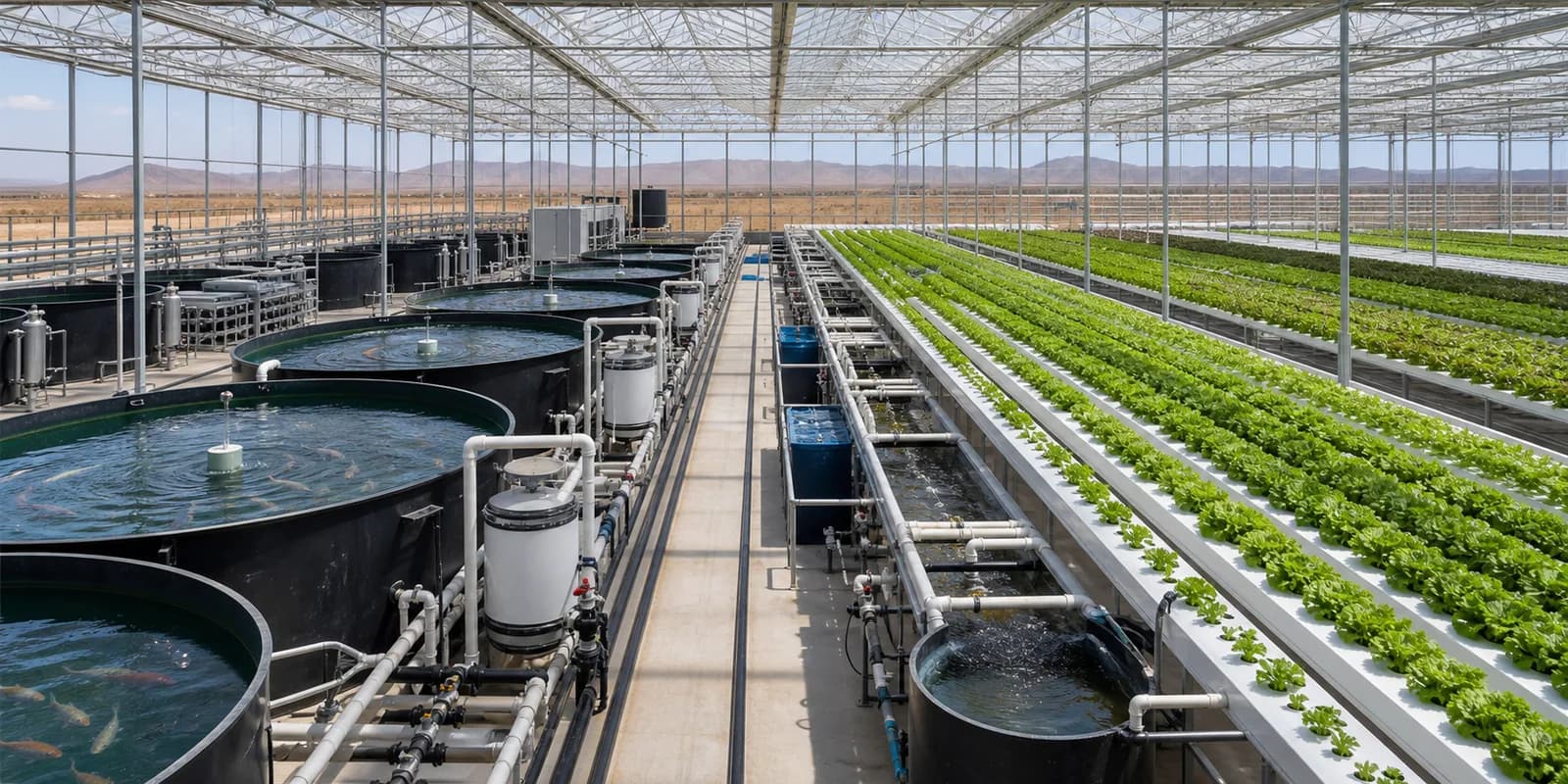
Aquaponics Vs Hydroponics: Which System Is Better For Modern Farmers?
Early one morning on a small farm facing severe water shortages, a farmer watched rows of lettuce struggle to survive in dry soil. Rainfall had become unreliable, fertiliser costs were rising, and traditional farming methods were becoming harder to sustain. Determined to find a better solution, the farmer began researching alternative growing systems and discovered two innovative approaches: aquaponics and hydroponics. Both promised higher yields, lower water use, and the ability to grow crops in controlled environments. But which one truly makes sense for farmers looking to build efficient and scalable operations? Understanding the differences between aquaponics and hydroponics can help farmers choose the system that best supports productivity, profitability, and long‑term sustainability.
What Is Hydroponics?
Hydroponics is a method of growing plants without soil, using nutrient‑rich water solutions to deliver essential minerals directly to plant roots. In a hydroponics system, plants are typically grown in inert growing media such as coco coir, rockwool, or perlite while nutrients are dissolved in water and delivered through irrigation systems. Modern hydroponics systems allow farmers to precisely control nutrient levels, water supply, temperature, and lighting. This level of control significantly improves plant growth and reduces environmental risks. Hydroponics can use up to 90–95% less water than traditional soil farming because water is recirculated rather than lost through runoff or evaporation. Additionally, hydroponic systems can produce up to 10–30 times higher yields per square metre when compared to open‑field agriculture. Because hydroponics eliminates soil‑borne diseases and allows plants to grow in controlled environments such as greenhouses, it has become one of the most widely adopted technologies in climate‑smart agriculture.
What Is Aquaponics?
Aquaponics combines aquaculture (fish farming) with plant cultivation. In an aquaponics system, fish waste provides nutrients for plants, while plants help filter and clean the water for the fish. This creates a closed‑loop ecosystem where both fish and crops grow together. In theory, aquaponics systems mimic natural ecological cycles. Fish produce ammonia through waste, beneficial bacteria convert the ammonia into nitrates, and plants absorb those nutrients as fertiliser. Aquaponics is often promoted as a sustainable farming model because it integrates food production across two outputs: vegetables and fish. However, aquaponics systems are biologically complex. Farmers must carefully manage water chemistry, fish health, bacterial balance, and plant nutrient levels simultaneously. If one component fails, the entire system can become unstable. Also learn: How Much Water Does Hydroponics Use?
Aquaponics Vs Hydroponics: 4 Key Differences
Although aquaponics and hydroponics both grow plants without soil, the two systems differ significantly in complexity, scalability, and operational management.
System Complexity
- Hydroponics systems are generally simpler to manage because farmers control nutrient solutions directly. Growers can adjust nutrient formulas based on crop requirements and growth stages.
- Aquaponics systems require maintaining a balance between fish populations, bacterial colonies, and plant nutrient demand. This biological dependency makes aquaponics more difficult to optimise for commercial production.
Nutrient Control
- Hydroponics allows farmers to precisely adjust nutrient concentrations. This means crops receive exactly the nutrients they require for optimal growth.
- In aquaponics, nutrients depend on fish waste and microbial conversion. While this can work well for certain crops, nutrient levels are harder to fine‑tune compared to hydroponic systems.
Productivity
- Hydroponics typically produces faster plant growth and higher yields due to optimised nutrient delivery and environmental control.
- Aquaponics systems often prioritise ecosystem balance rather than maximum crop productivity.
Scalability
- Hydroponics is widely used in large commercial greenhouse farms because it scales efficiently. Many modern greenhouse operations rely on hydroponics to produce tomatoes, cucumbers, leafy greens, and herbs year‑round.
- Aquaponics is more commonly used in small‑scale farms or research environments due to its biological complexity.
Do you know: What Can You Grow With Hydroponics?
Why Many Farmers Choose Hydroponics
For farmers focused on commercial production, hydroponics offers several practical advantages.
- First, hydroponic systems provide predictable yields. Because farmers control nutrients, water supply, and environmental conditions, crop performance becomes far more consistent.
- Second, hydroponics allows farms to operate in regions where traditional agriculture struggles. Areas with poor soil quality, drought conditions, or marginal land can still support productive farms using hydroponics technology.
- Third, hydroponics supports efficient water use. According to the FAO, agriculture currently accounts for about 70% of global freshwater withdrawals, making water‑efficient farming technologies increasingly important for future food security.
By recirculating water and precisely managing irrigation, hydroponics systems dramatically reduce water waste. Finally, hydroponics enables year‑round food production. Controlled‑environment agriculture allows farmers to produce crops regardless of seasonal weather patterns, improving supply reliability and profitability.
The Role Of High‑Tech Greenhouse Farming
Hydroponics is often integrated with greenhouse technology, climate control systems, and automated irrigation to create highly efficient farming operations. These systems allow farmers to monitor temperature, humidity, nutrient levels, and plant health in real time. Sensors and climate computers optimise growing conditions, leading to higher yields and better crop quality. Organisations such as Drylands support farmers in developing modern climate‑smart farms that incorporate hydroponics and advanced greenhouse technologies. Through feasibility studies, farm design, and project development support, Drylands helps farmers transition toward more resilient and productive agriculture systems.
When Aquaponics May Still Be Useful
While hydroponics dominates large‑scale greenhouse production, aquaponics can still offer value in certain contexts. Small farms, educational projects, and community food initiatives may benefit from aquaponics because it combines fish and vegetable production in one integrated system. However, farmers seeking high‑volume commercial production typically prefer hydroponics because it provides greater operational control and lower biological risk. You need: Climate-Smart Agriculture Solutions
Choosing The Right System For Your Farm
When evaluating aquaponics and hydroponics, farmers should consider several factors:
- farm size and scalability
- investment budget
- technical expertise
- crop selection
- access to water and energy
- long‑term production goals
For many commercial farms, hydroponics offers the most reliable pathway to efficient, scalable food production. With careful design and proper management, hydroponics systems can deliver high yields while conserving valuable resources.
Conclusion: Aquaponics Vs Hydroponics
Both aquaponics and hydroponics represent important innovations in modern agriculture. Aquaponics offers a fascinating closed‑loop ecosystem that combines fish and plant production, while hydroponics focuses on precise nutrient delivery and controlled growing conditions. For farmers seeking predictable yields, efficient water use, and scalable production, hydroponics often provides the most practical solution. As global demand for food continues to grow and climate pressures intensify, controlled‑environment agriculture systems built around hydroponics will likely play an increasingly important role in feeding the world. Are you considering building a modern hydroponics farm but unsure where to start? Drylands works with farmers, investors, and governments to design and develop climate‑smart agricultural projects tailored to local conditions. Our team provides feasibility studies, greenhouse farm design, and operational support to help farmers successfully implement hydroponics systems. If you would like to learn how our agricultural solutions can support your next project, contact us today to speak with our team and start planning your future farm.