Greenhouse Farming in Africa: The Future of Food
Discover how greenhouse farming in Africa is solving food security challenges. Learn why high-tech farms are the future of sustainable food production on the continent
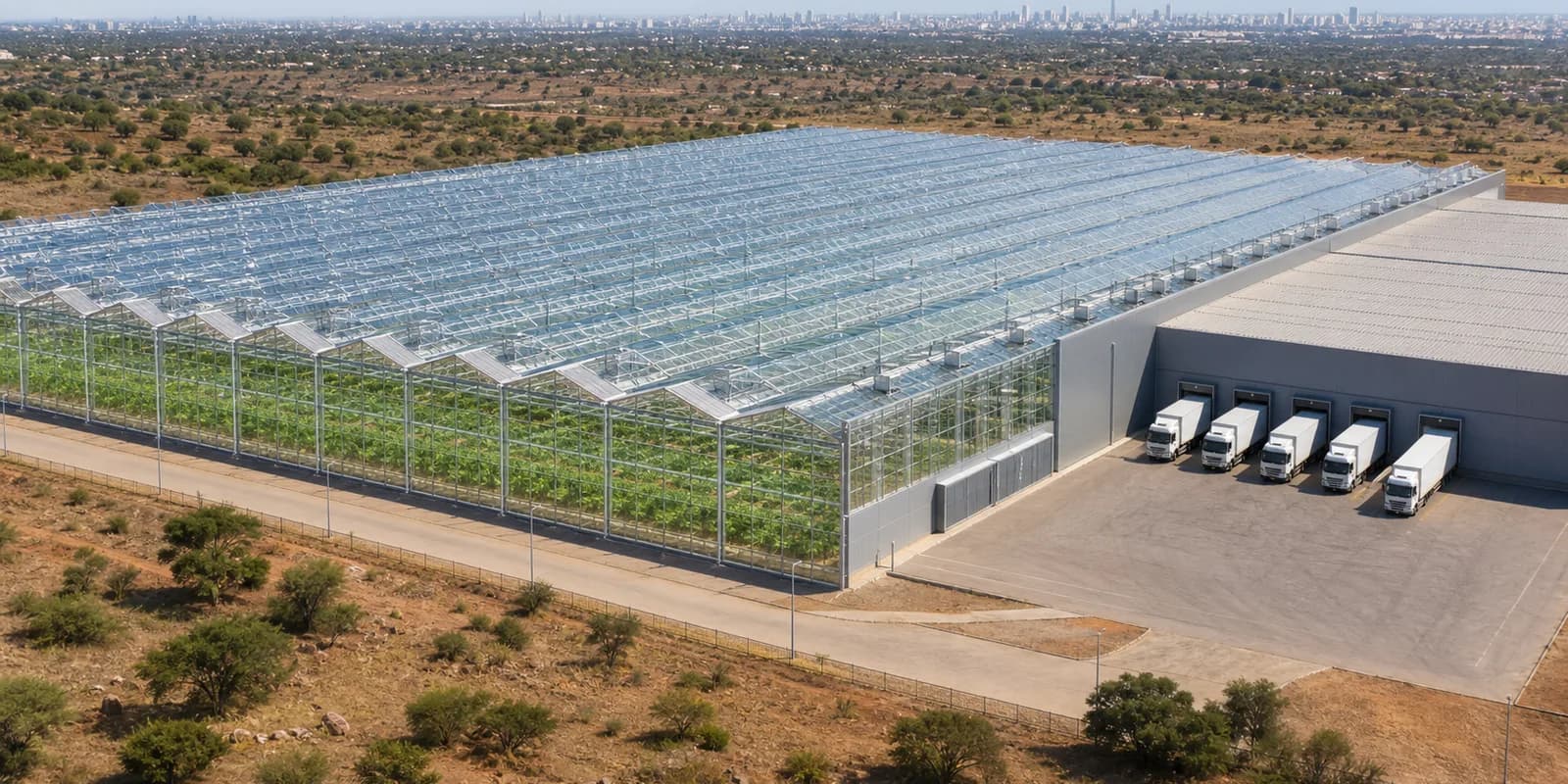
Greenhouse Farming in Africa: Why High-Tech Growing Is the Continent's Best Bet for Food Security
Picture a small town on the outskirts of Lusaka. The rains came two weeks late this season. The maize is struggling. A mother at a market stall watches the prices of basic vegetables creep upward — again. Scenes like this play out across the continent every year, driven by climate uncertainty and a growing population that traditional farming is simply not equipped to feed. It is within this reality that greenhouse farming in Africa is no longer just an innovation story — it is a survival strategy.
Why Africa Cannot Afford to Ignore Greenhouse Farming
The numbers tell a pressing story. Africa currently spends around USD 43 billion on food imports annually, a figure projected to climb to USD 90 billion by 2030 MDPI — a staggering dependence on external food sources for a continent that holds enormous agricultural potential. At the same time, Africa's population is projected to reach nearly 2.8 billion by 2050, requiring a 75% boost in food production compared to current output MDPI. Traditional open-field farming, which relies almost entirely on rainfall, simply cannot scale fast enough to meet this demand. Only 5% of cultivated land in Africa currently makes use of irrigation MDPI, leaving the vast majority of farmers at the mercy of increasingly erratic weather. Greenhouse farming in Africa offers a fundamentally different model: one where the environment is controlled, yields are predictable, and production runs 365 days a year.
What Makes Greenhouse Farming Different
At its core, greenhouse farming in Africa means cultivating crops inside structures where temperature, humidity, light, and irrigation are precisely managed. This controlled environment agriculture approach unlocks several advantages that open-field farming cannot match:
- Year-round production — crops are not dependent on seasonal rainfall cycles
- Up to 30× higher yield per square metre compared to open-field farming
- 80–90% less water usage through closed-loop recirculation systems
- Proximity to urban markets — farms can be placed on marginal land near cities, reducing food miles and delivering fresher produce
- Resistance to pests, drought, and extreme weather — all of which are intensifying across the continent
Africa's population is projected to reach 2.5 billion by 2050, creating an urgent need to enhance agricultural productivity that traditional farming methods simply cannot address Greenhouse. Greenhouse farming in Africa directly tackles this gap by producing significantly more food from significantly less land.
The Role of Solar Energy and Water Efficiency
One of the biggest concerns about high-tech farming in Africa has historically been energy cost and water access. Modern greenhouse operations have largely solved both. Solar-powered greenhouse farms now operate across several African countries, bringing energy costs down dramatically while aligning with the continent's abundant sunlight. Water efficiency is equally compelling. Dutch-style glasshouse systems — the gold standard for controlled environment agriculture — deliver water directly to each plant with the precise nutrient mix required, then recirculate all runoff. Almost all water provided is absorbed by the plant itself. In a continent where water scarcity is one of the defining challenges of the coming decades, this hyper-efficiency is not just desirable — it is essential. Drylands' approach to climate-smart farming is built around exactly this model: renewable solar energy, closed-loop water systems, and marginal land utilisation to produce high-quality, consistent food close to the communities that need it most.
From Marginal Land to Productive Farmland
A common misconception about greenhouse farming in Africa is that it requires prime agricultural land. It does not. Because these farms rely on hydroponics rather than soil, they can be established on land that would otherwise sit unproductive — degraded plots on the outskirts of cities, arid zones unsuitable for traditional crops, or areas too small for conventional farming operations. This is a critical advantage in a continent where more than 87 million people are currently facing hunger in East and Southern Africa alone World Bank, and where urban populations are growing faster than food supply chains can keep up. By siting greenhouse farms near urban centres, producers can deliver fresh produce to consumers within 24 hours of harvest — a radical improvement over long-distance supply chains that cause nutritional loss and food waste. Drylands' projects page illustrates how this model is being deployed in practice: transforming underutilised land into productive, solar-powered food systems that serve growing urban markets.
Challenges and the Path Forward
Greenhouse farming in Africa is not without its barriers. Capital costs remain high — quality glasshouse construction typically requires significant upfront investment. Technical expertise is needed at the management and operations level. And policy frameworks in many countries have yet to catch up with the pace of agricultural innovation. But these are solvable problems. The African Development Bank Group has committed to mobilise USD 25 billion in climate finance by 2025 African Development Bank Group, part of a growing recognition that climate-resilient agriculture infrastructure needs investment now, not later. Governments, development finance institutions, and private operators are increasingly aligned on the urgency. Drylands' advisory services are designed to address these barriers directly — helping governments and investors design, build, and operate high-tech greenhouse farms that are right-sized for local conditions and financially viable over the long term.
Conclusion
Greenhouse farming in Africa is not a luxury for the future — it is a practical, scalable response to the food security challenge the continent faces right now. With climate change accelerating, populations growing, and import dependency rising, the case for controlled environment agriculture has never been stronger. High-tech farms that use less water, less land, and no soil — powered by the sun — represent the most resilient path to feeding Africa's cities sustainably and affordably. Are you a government agency, investor, or agricultural developer exploring sustainable food production solutions for Africa? Drylands brings decades of expertise in climate-smart greenhouse farming to projects across the continent — from concept and feasibility through to construction, commissioning, and operations. Contact Drylands today to explore how a high-tech greenhouse farm can address food security in your region.