Greenhouse Feasibility Studies in Africa: What a Bankable Study Should Cover
What should a commercial greenhouse feasibility study cover? Assess market demand, site conditions, design, operating costs and the route to investment.
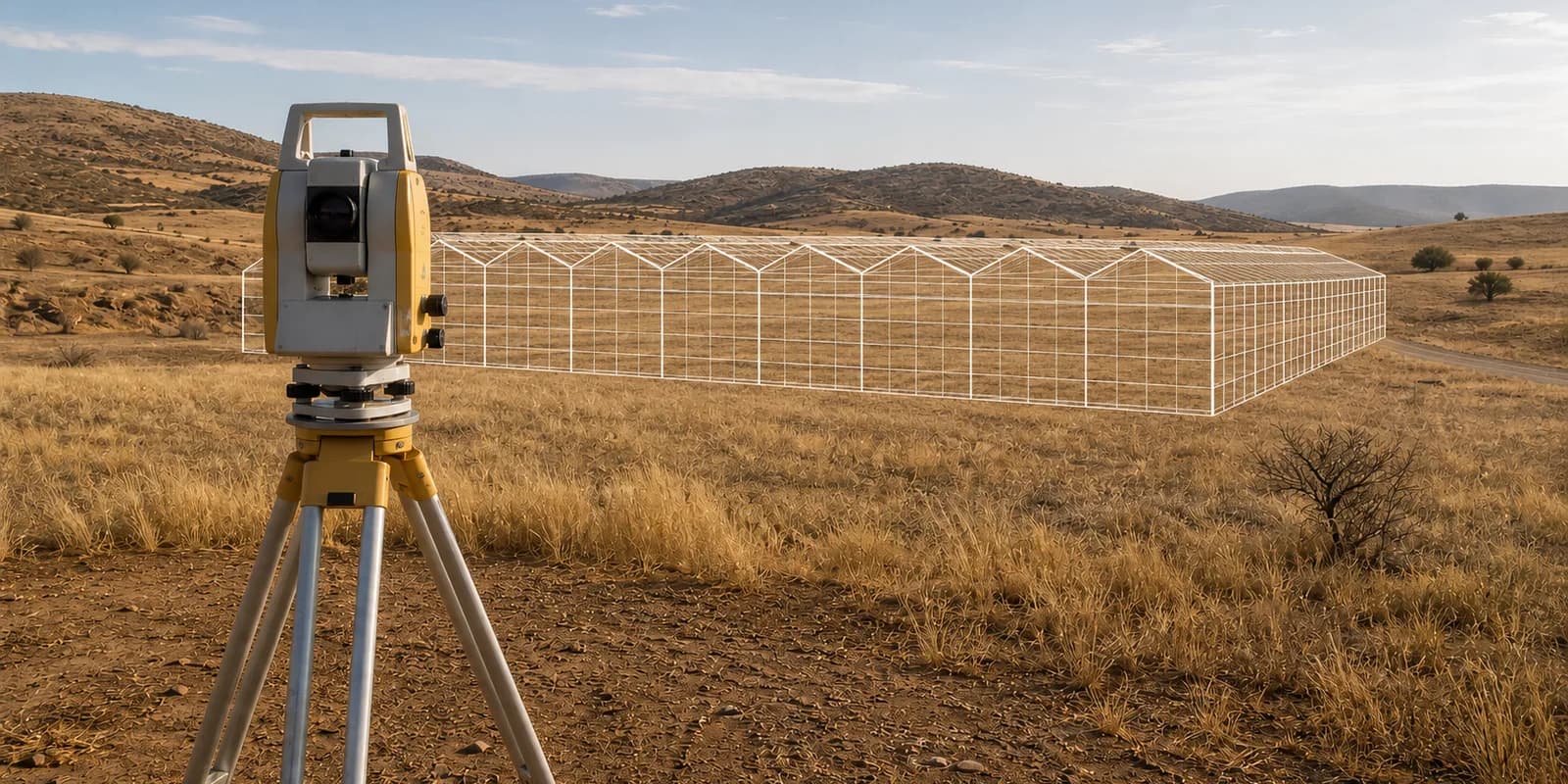
A commercial greenhouse feasibility study should establish whether a particular crop, site, design and sales plan can support a viable business. It should explain the investment required, how the farm will operate, and what could prevent it from meeting its targets.
For an investor, the useful outcome is a clear decision: proceed, change the proposal, investigate a specific uncertainty or stop. A study that reaches one of those conclusions with sound evidence has done its job.
Establish what decision the study must support
An initial screening and a full feasibility study serve different purposes. Screening identifies problems that could rule out a project before the owner spends heavily on design and investigation. These might include an unsuitable water source, weak buyer demand or an electricity connection that cannot support the intended operation.
A full study examines a viable-looking proposal in greater detail. Its scope should reflect the questions an investor, lender or public agency needs answered. Agree those questions at the outset, together with the information required and the people responsible for providing it.
The term “bankable” should be used carefully. A study can provide evidence suitable for a financing decision. Financing still depends on the project, the sponsor and the requirements of the proposed funders.
Start with the market
The revenue forecast needs more support than a crop price found online. Identify the intended buyers, their product specifications, the volumes they can absorb and how demand changes through the year.
Check the terms on which the farm would sell. Packaging, delivery charges, rejected produce, commissions and payment delays can all affect the value of a sale. A retail shelf price is a different measure from the amount received by the grower.
Crop selection should follow this work. A crop may grow well at the proposed site yet struggle to find a sufficiently large or reliable market. Our guide to offtake and market validation explains the evidence to assemble before construction.
Connect the site assessment to the design
The study should establish the available climate data, water quantity and quality, power supply, access routes and usable land area. Material gaps need an investigation plan, with an owner and a cost.
The greenhouse design should respond to those findings. Cooling affects water and electricity demand. The cultivation system affects irrigation and drainage. Crop choice affects labour, handling and packing requirements.
Ask the study team to explain these connections. If the agronomy, engineering and financial sections use different assumptions, the final result can look convincing while describing a farm that could never operate as a single business.
Build the complete funding requirement
Include site preparation, the greenhouse, cultivation equipment, climate systems, water infrastructure, power, packing and cold storage. Add professional fees, freight, installation, commissioning and the costs incurred before commercial sales begin.
Working capital deserves its own calculation. Staff, inputs and utilities must be paid while the crop establishes. Once deliveries begin, customer payment terms create another gap between expenditure and cash received.
Show when funds are needed as well as the total. A profitable annual forecast can conceal a cash shortage during construction or the first production cycle. The project cost guide sets out the main budget categories.
Make the evidence visible
A useful study allows the reader to distinguish between observations, quotations, model outputs and assumptions. For each important figure, record its source, date and relevance to the proposed project.
For example, a yield from another farm needs context: crop, cultivar, climate, growing area, production period and the share sold at the assumed grade. An equipment quotation needs a defined scope and a clear statement of exclusions.
Test the assumptions that could change the decision. Consider lower saleable production, weaker prices, higher input costs and a delayed start. Explain which changes the business can absorb and which would require redesign or additional funding.
Specify what happens after the study
The final report should identify the remaining work: permissions, investigations, buyer discussions, design development, procurement and the appointment of an operator. Each step needs a responsible party and a condition for moving forward.
Drylands brings growers, engineers and commercial experience into the same assessment. Our investor advisory work covers initial screening, feasibility, development and operation, so the proposed business can be considered through its full life.
If you have a location, crop proposal or supplier quotation, discuss an initial project screening with our team.