Greenhouse Due Diligence: Questions Investors Should Ask
Review a greenhouse proposal's crop, market, technology, cost, delivery and operating assumptions with practical questions and an evidence checklist.
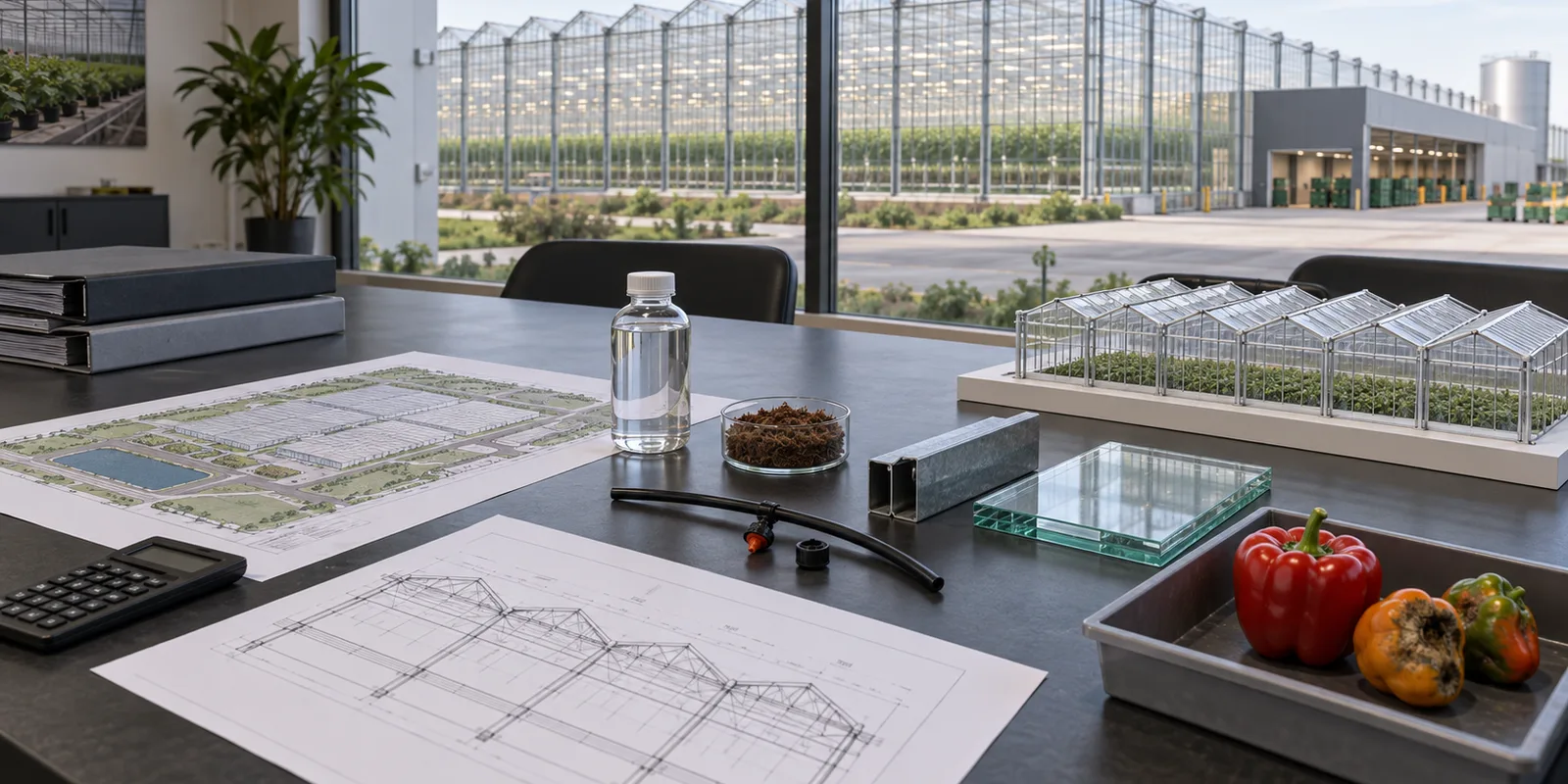
Greenhouse due diligence examines whether a proposed farm can be developed and operated on the basis presented to investors. It should trace the main commercial and technical claims back to evidence and identify the conditions that could change the investment decision.
Start with the assumptions that have the greatest effect on the result. A detailed financial model is useful only when its crop, market, resource and delivery inputs can be explained.
What supports the production forecast?
Ask where the yield figures come from and whether they describe the proposed crop, cultivar, climate, system and production period. Confirm the area used in the calculation and whether the output is harvested weight or saleable product.
If the forecast uses another facility's results, examine the differences. The proposed farm may have different equipment, staffing, pest pressure or seasonal conditions. Those differences need to be reflected in the assumptions.
Where simulation supports the forecast, request its scope and evaluation evidence. Climate predictions and commercial crop output require different supporting work. Establish which results were measured, which were modelled and which remain estimates.
Is the proposed market large enough?
Review buyer discussions, specifications, price evidence and the volumes assumed. Check whether the forecast depends on selling all production into the highest-priced channel.
Test the timing of supply against demand. Identify the outlets for product outside the preferred grade and for periods when the main customer buys less. Include the costs of packaging, transport, commissions and other deductions in the revenue assessment.
An offtake review should also examine payment timing and customer concentration. Revenue that arrives late can create a funding problem even where sales meet the annual forecast.
Are resources and infrastructure available?
Obtain the evidence for water quantity, quality and reliability. Review the planned treatment, storage and permissions. Establish whether electricity capacity, connections and backup arrangements match the equipment schedule.
Confirm the condition of access roads and the infrastructure included in the development budget. A location on a map and an expression of support from a stakeholder are starting points for investigation, rather than completed technical work.
For each unresolved matter, record what must be done, who is responsible and whether the result is a condition of committing funds.
Does the budget describe the complete farm?
Reconcile the capital budget with the design and procurement scope. Identify excluded equipment, site works, freight, installation, professional costs and pre-operating expenditure.
Review contingencies and the basis for them. Check payment dates, currency exposure and the assumptions about tax or duty treatment with the relevant advisers.
Examine working capital through construction and ramp-up. Test delays and weaker early production. The owner needs to understand the largest funding requirement and what additional commitments could arise under adverse conditions.
Who will deliver and operate it?
Identify the named parties responsible for development, construction, growing, recruitment, packing and sales. Assess their relevant experience and the resources committed to this project.
A management company's reputation does not establish that a particular grower or delivery team is available. Ask how key roles will be filled, which skills must be recruited and what happens if a critical appointment is delayed.
Review the proposed allocation of responsibilities. The operator's targets should be considered alongside the owner's obligations for infrastructure, funding and approvals. Explain how performance will be measured and how problems will be escalated.
What changes the decision?
Test lower saleable output, weaker realised prices, higher operating costs and a later start. Consider related events together where appropriate: a delay can increase costs, postpone revenue and alter the production season.
The conclusion should identify the evidence supporting the proposal, the principal uncertainties and any conditions for proceeding. Some findings may justify a smaller first phase or further investigation before a full commitment.
Drylands offers initial project screening and feasibility services. Its role in any assignment should be clear, particularly where development, operation or co-investment is also proposed. An investor may require separate independent advisers for specific parts of its review.
If you have a greenhouse proposal to assess, discuss an initial screening with our team.