Solar and Backup Power for Commercial Greenhouses: A Planning Guide
Plan greenhouse energy around hourly demand, critical equipment, solar generation, storage and backup supply, with clear cost and reliability assumptions.
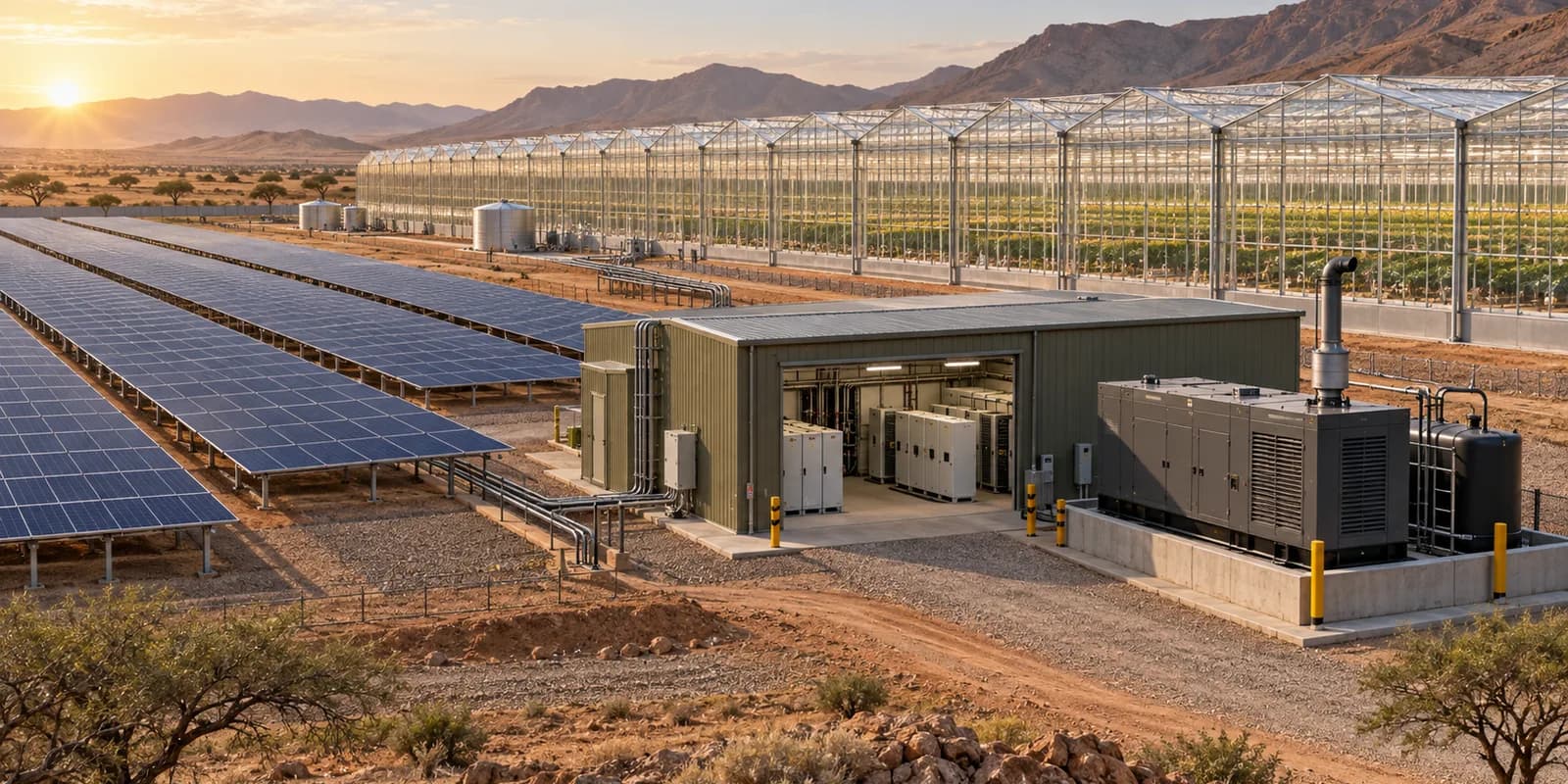
A greenhouse energy plan must account for when electricity is needed, which equipment must keep running and how the farm will respond to an interruption. Annual electricity use is a useful budget figure, but it is insufficient for selecting solar panels, batteries or backup generation.
Begin with the proposed farm's equipment and operating schedule. That work gives the energy designer a demand profile to assess against the available supply.
Build a profile of electricity demand
List the pumps, fans, climate equipment, cold rooms, packing equipment, lighting and other electrical loads. Record their power requirements, operating periods and any significant start-up demand.
For an existing farm, use measurements where available and investigate what the main loads are doing. For a proposed farm, use the equipment schedule and engineering assumptions, then identify which estimates need confirmation.
Consider seasonal differences and production phases. A young crop, a mature crop and a busy packing period can place different demands on the site. Shared facilities and future expansion should be shown separately so the owner understands what the first phase must support.
Decide what must survive an interruption
The essential load during an outage may differ from normal demand. Identify the equipment needed to protect people, crops, stored produce and critical records. Agree how long each function can tolerate a loss of power.
This is work for the grower, facilities team and electrical designer together. An equipment list alone does not explain the consequences of stopping a pump or losing climate control under difficult conditions.
NREL's guidance on battery storage for resilience identifies critical load and anticipated outage duration as central sizing considerations. Those principles need to be applied to the actual farm and its operating requirements.
Compare solar output with demand through the day
Estimate solar generation for the proposed location and installation, then compare it with the timing of electricity use. Assess how much can be used directly, what happens to any surplus and where supply gaps remain.
Include periods of reduced generation and the equipment's operating limits. A system that produces an attractive annual total may still leave the farm dependent on another source at particular times.
The assessment should state the assumptions for grid access, export arrangements and tariffs. Confirm these for the relevant utility and connection; arrangements at another site may not apply.
Give storage and backup distinct jobs
A battery may shift electricity between periods, support selected loads during an interruption or perform a combination of tasks. Define which function takes priority and how the controls preserve any required reserve.
Battery energy capacity, measured in kilowatt-hours, and power capacity, measured in kilowatts, answer different questions. The first concerns available energy; the second concerns the rate at which it can be delivered. The proposed system must satisfy both the demand and duration being specified, with operating losses and limits accounted for.
If a generator is included, assess its intended load, starting arrangements, fuel supply, service requirements and interaction with the other equipment. Assign responsibility for testing and maintenance. Installed backup equipment needs an operating procedure that the farm team can carry out.
Compare cost and continuity of operation
The lowest-cost arrangement under normal conditions may offer less protection during interruptions. Show the owner that trade-off clearly.
Compare capital expenditure, purchased electricity, fuel, service, equipment replacement and relevant charges over a consistent period. Present outage scenarios separately, explaining which loads remain supplied and the consequences of any shortfall.
Avoid assigning a precise financial value to an avoided crop loss without supporting assumptions. The decision can still be informed by the duration of supply maintained and the operational risk left with the farm.
Keep energy design connected to greenhouse design
Cooling, irrigation and post-harvest choices affect electricity demand. Revisit the energy plan when these systems change, and update the project budget accordingly.
Drylands' technical advisory work considers energy alongside crop requirements, climate management and the commercial plan. Discuss your proposed location and operating requirements with us to establish the energy assessment your project needs.