The Greenhouse Is Only Half the Farm
Working feature outline for refinement. Follow the work from crop planning to packing, delivery and sales, and see what a commercial greenhouse project needs beyond the growing structure.
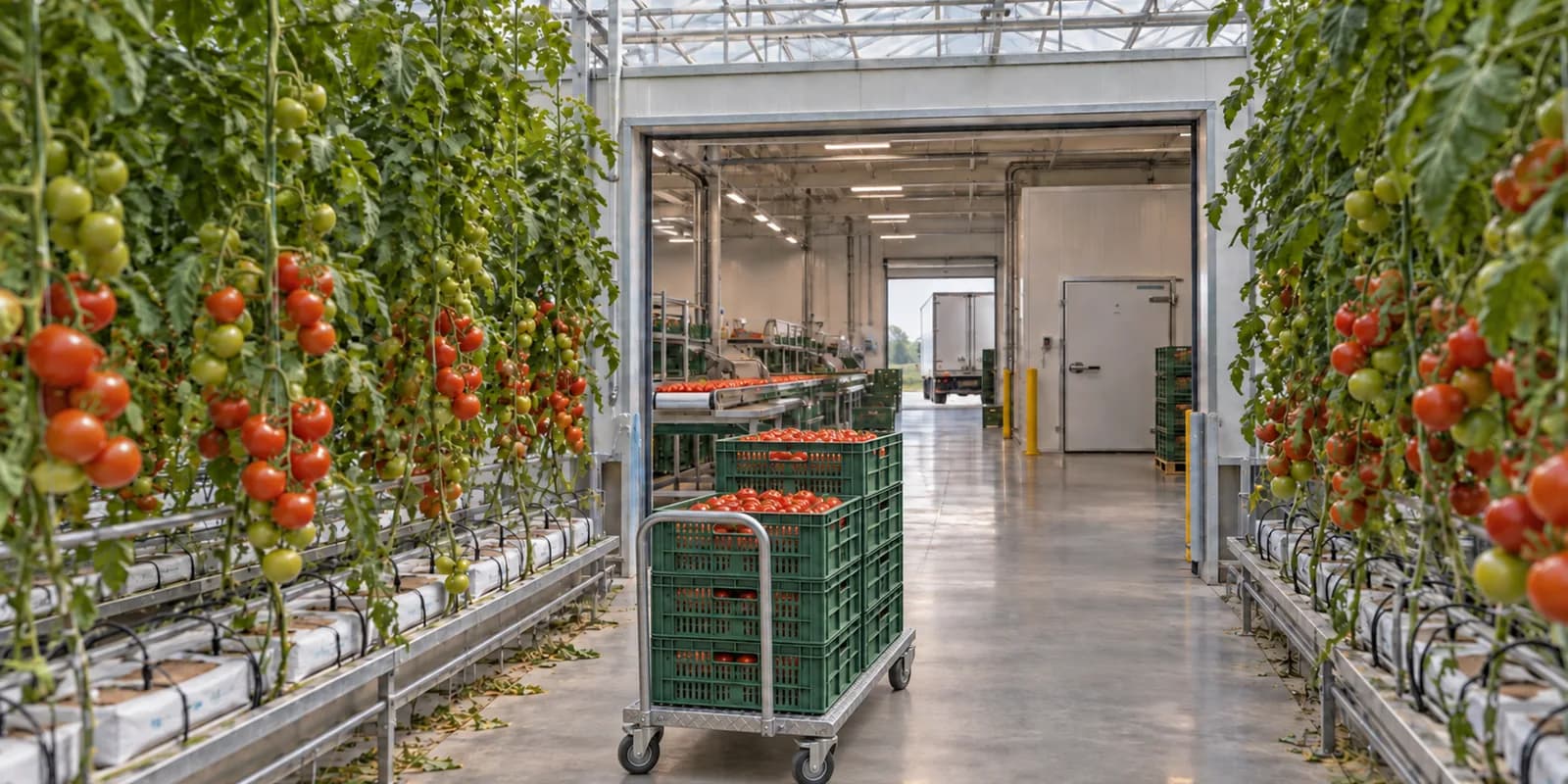
Feature working outline
This is an unfinished editorial outline for refinement. It contains writing prompts and evidence requirements and must remain a draft.
Editorial note: Working feature outlineThis note contains proposed copy, section plans and prompts for Rik's refinement. It is not a finished article. Use one real crop or batch to connect the sections once the supporting records are available.
Proposed standfirst
Growing a crop is one part of supplying fresh produce. The work of grading, packing, delivery and sales explains why a commercial farm needs an operating plan long before construction is complete.
The argument
Show what it takes to turn a greenhouse crop into repeat deliveries and income. Grootvlei, Plantiful, the operating team and the software belong in the story where they explain a real handover or decision.
The intended readers are investors and public agencies considering a farm project. They should understand which responsibilities and costs must be addressed from the beginning, and why an experienced operator has a role before handover.
Proposed opening
A greenhouse project has to deliver produce that a customer will accept, in the quantity and condition agreed, at the time it is needed. The building, crop and climate equipment are part of that job. So are the people who harvest, grade, pack, dispatch and account for the sale.
Those activities place requirements on the farm from the outset. A buyer's pack specification affects equipment and labour. A delivery window affects harvesting and transport. The time between dispatch and payment affects working capital.
Drylands' work across farming and Plantiful brings these requirements into the same commercial discussion. To understand what a farm needs, it helps to follow the produce all the way to its buyer.
For editorial refinement: Your opening exampleChoose one actual crop and batch, or a documented recurring order. What made it useful to the buyer? What did the team have to get right to supply it? An ordinary delivery with a clear chain of decisions may be stronger than a promotional success story.
1. Start with the order
Purpose: Give the story a customer requirement rather than a general claim about demand.
Write here: Describe the product and delivery requirement, using only commercial details that may be shared. Explain how the buyer specifies grade, size, ripeness, packaging and timing.
Details to add: Crop, market, production period, specification and the reason the buyer chose the product. A buyer can remain unnamed; do not invent a substitute customer or imply permission to use its brand.
Your notes:
2. Work backwards into the greenhouse
Purpose: Explain how the order affects production decisions.
Write here: Trace the requirement into crop planning, harvest forecasts, labour and the growing environment. Identify one decision that would have been different if the crop were going to another market.
Suggested copy:
The sales plan gives the grower a target, but the crop does not develop to an invoice schedule. The operating team needs a current view of expected harvests and a process for dealing with differences. That information has to reach the people making delivery commitments.
Evidence to add: An anonymised production-to-order view, or a simple diagram reviewed by the people doing the work. Describe Farm Manager only to the extent that its current functions explain this process.
Your notes:
3. Explain what becomes saleable product
Purpose: Make the economics concrete.
Write here: Describe the actual grading and packing process. Explain what happens to produce that falls outside the main buyer's specification and what the team learns from it.
Evidence to add: An approved batch reconciliation showing harvested, packed, dispatched and accepted quantities, where the records support it. Use the actual definitions applied at the farm. Keep revenue confidential if necessary; the physical reconciliation can still be useful.
Questions for refinement: Which losses or downgrades can the team influence? Which costs change with the pack format? Where has a production or packing decision improved the commercial result, if there is evidence to show it?
Your notes:
4. Show the people doing the work
Purpose: Give employment and training a practical foundation.
Write here: Follow a real role or team through the work required for this order. Explain the skill involved, how it is learned and what competent performance looks like.
Evidence to add: A short conversation with a willing staff member or supervisor, with agreed attribution and a relevant photograph. Distinguish training participation, practical competence and employment outcomes.
Questions for refinement: What would a visitor underestimate about the job? What takes time to learn? What responsibility can an experienced team member take on that a new recruit cannot yet handle?
Your notes:
5. Follow the batch through dispatch and payment
Purpose: Complete the commercial journey.
Write here: Explain the records and handovers that connect the produce to the order, dispatch and invoice. Show where Order Desk contributes, using current functions and an approved example.
Suggested copy:
The work continues after the vehicle leaves. The farm needs confirmation of what was received, a record of any difference and an invoice that matches the agreed terms. These details affect both customer confidence and the cash available for the next production cycle.
Evidence to add: A redacted sequence of records or a simple diagram. If discussing freshness or shelf life, add evidence for the crop, handling conditions and measurement method before making comparisons.
Your notes:
6. What the owner needs to plan before construction
Purpose: Connect the story to the advisory decision.
Write here: Select three or four requirements demonstrated by the example. These might include packhouse capacity, the right supervisory roles, staff facilities, buyer approvals or working capital. Explain why addressing them during feasibility is useful.
Proposed closing:
These requirements belong in the original project plan. They affect the layout, equipment, staffing and funding needed to supply customers consistently.
Drylands' development and operating services bring those decisions together, from feasibility through to daily production. Discuss the development and operation of your proposed farm.
Evidence and visual plan
- To complete: Choose the crop, batch or recurring order.
- To complete: Reconcile the production and sales records used in the story.
- To complete: Confirm current Farm Manager and Order Desk functions shown.
- To complete: Agree which buyer details, figures and documents may be used.
- To complete: Obtain the staff member's own words and agreed attribution.
- To complete: Select original growing, packing and dispatch photographs.
- To complete: Verify any shelf-life or grade-improvement claim independently of marketing copy.
- To complete: Confirm the precise Grootvlei facility and Drylands' role; distinguish it from the wider public programme where necessary.
- To complete: Remove all editorial prompts before creating the public article body.