Choosing Greenhouse Crops: Start With the Buyer and the Margin
Choose greenhouse crops by market demand, achievable saleable yield, seasonal prices, labour, logistics and operating costs—not headline prices alone.
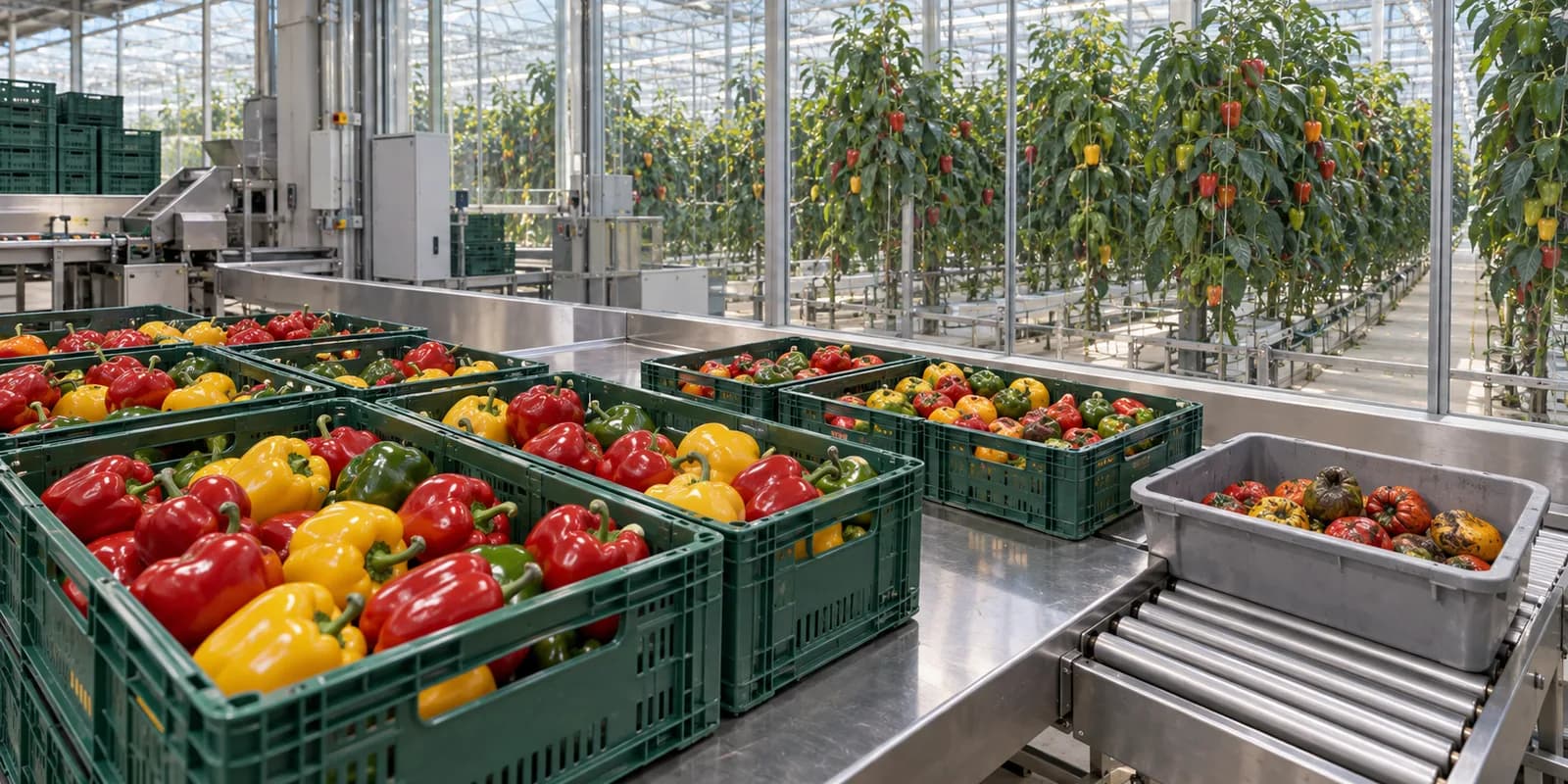
The most profitable crop for a greenhouse depends on its location, design, operating team and customers. A high selling price can attract attention, but it says little about the cost of producing and delivering an accepted product.
Begin crop selection with a commercial question: what can this farm supply reliably, to which buyers, on terms that support the business?
Establish what buyers actually want
Define the product in enough detail to assess it. Crop type is a starting point. Buyers may also specify cultivar, size, colour, ripeness, packaging, certification and delivery frequency.
Investigate volumes and seasonality. A buyer may welcome a product during a supply gap but have limited interest when local production peaks. Ask how the proposed harvest schedule matches those periods and what outlets are available when the preferred buyer takes less.
Record the evidence behind the price assumption. Distinguish a quoted buying price, a recorded transaction and an estimate. Check whether delivery, packaging, commissions or other deductions have already been accounted for.
Assess the crop against the site and design
The production plan needs a credible basis for the proposed climate and system. Consider the required growing conditions, crop cycle, cultivation method, labour and technical skills.
Output achieved elsewhere is useful evidence when its context is understood. Record the production period, growing area, cultivar and cultivation conditions. Explain the adjustments made when using it in the proposed farm's budget.
Check the less favourable parts of the year. The crop may require a different cooling strategy, shorter production season or more expensive infrastructure than the initial design assumes. Resolve those questions before treating the yield forecast as established.
Follow harvested produce through to sales
Harvested weight and saleable weight are different measures. Grading, damage, handling and the buyer's specification affect how much product can be sold into each channel.
Consider a simple illustration, unrelated to Drylands' operating results. A farm harvests 1,000 kg, of which 800 kg meets the intended buyer's specification. At a net receipt of R12 per accepted kilogram, that channel produces R9,600 of revenue. Any revenue from the remaining produce should be calculated separately, with its own outlet and costs.
That is a different forecast from multiplying the entire harvest by the headline price. It also identifies useful questions: why did the product fall outside specification, could the share improve, and is the secondary outlet dependable?
Compare costs consistently
For each crop, include plants, nutrients, crop protection, water, energy, labour, packaging, handling and delivery as applicable. Use consistent boundaries when comparing alternatives.
Pay particular attention to activities that differ between crops. Harvest frequency, crop work, grading and packing can change the staffing requirement. The farm also needs sufficient supervisory capacity during busy periods.
A contribution margin shows what remains after the costs assigned to producing and selling the crop. The project still has shared overheads, maintenance, financing obligations and capital expenditure to consider. A crop-level comparison should feed into a whole-farm financial assessment.
Test a workable production mix
Growing several crops can create more sales options, but also adds complexity. Check whether the proposed mix can share climate conditions, equipment and staff. Confirm whether compartments or separate handling arrangements are necessary.
Map the work through the year. Several crops reaching labour-intensive stages together can put pressure on the team. A crop with an attractive annual margin may be difficult to accommodate alongside existing production.
The preferred mix should be supported by a production schedule, staffing plan and sales plan that agree with one another. Review how the farm would respond if one crop underperformed or a buyer reduced orders.
Make the selection a documented decision
For each shortlisted crop, record the intended market, production assumptions, saleable grades, likely receipts, costs and unresolved questions. Explain why the chosen mix is suitable for this project and what would justify changing it.
Drylands' work spans production and the commercial requirements of fresh produce, including our Plantiful brand. That perspective informs our feasibility and investment planning.
If you are deciding what to grow, discuss your site and intended market with our team. Crop selection is most useful while it can still influence the greenhouse design and project budget.